



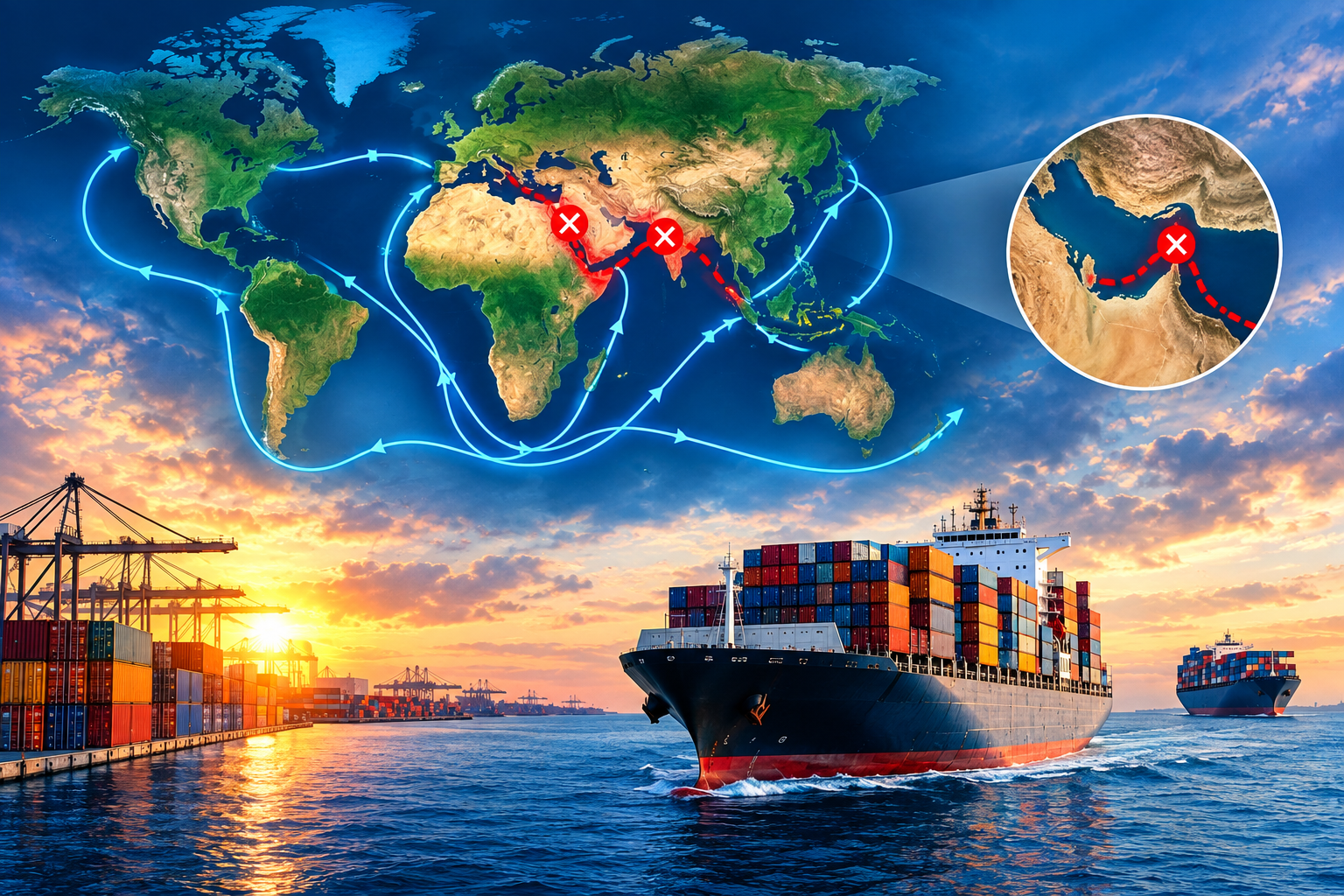
In global shipping and supply chain, new routes, directions and multimodal movements were developed to bring about an efficient and effective means of transportation at economical cost, rather than to ensure stability. This is mainly because all these routes and directions depend on the predictability of the routes, the fuel price and the uninterrupted movement of goods from one location to another or, in Exim trade, from one country to another.
When any of these predictable parameters breaks down or there is a disruption, it affects the complete supply chain and affects countries and people at large.
One such major disruption, or I can say a twin disruption, is the closure of the Red Sea due to attacks by the Houthis on major shipping vessels, and the blockade of the Strait of Hormuz by the military actions involving Iran and the USA.
The Strait of Hormuz accounts for 20% of the global petroleum liquids and liquefied natural gas (LNG), and around 100 – 120 cargo vessels and oil tankers transit this route every day. Come end of February 2026, all this changed, with major shipping companies refusing to enter the Strait of Hormuz in view of the safety of ships, cargoes and personnel. Insurance companies either refused to insure the ships that pass through the Strait or increased the cost of insurance, putting an additional burden on vessel owners and liner services.
While shipping lines and NVOCCs declared Force Majeure and recovered cost from shippers or consignees, it was the shippers or consignees and their logistics or forwarding agents who bore the brunt of this closure, paying higher detention, demurrage or re-routing and trucking costs, all of which were not budgeted, leading to many disputes.
The Red Sea too has caused huge damage since the blockade of November 2023, with all the main line operators refusing to use the Suez Canal because of attacks by the Houthis. This forced them to sail around the Cape of Good Hope. The number of ships passing through the Red Sea / Suez Canal dropped from an average of 2000+ per month to barely 800 per month.
But logistics is all about finding new routes and solutions. The Chinese made the most of their developed rail network into Europe, with a direct transit time of 12-15 days, but because of demand this now results in a wait of 30-45 days.
Cargoes into CIS countries were severely hit, with movements routed via China, Turkey, Georgia and Pakistan (which is now disrupted due to the conflict with Afghanistan). New routes are available, but at higher transit times, higher freight and with uncertainties. At times containers wait at the border for days and weeks.
The Middle East is still affected, and containers are routed via Sohar, Khorfakkan and Jeddah, with much higher costs plus detention and demurrage additionally charged to the customer by the liners.
Global trade will go on in spite of these disruptions, but routes will change. Exporters and importers will have to:
Insurance cost has increased and, with more disruption, the cost is likely to go up. We can all hope that the issues concerning the Strait of Hormuz and the Red Sea are resolved at the earliest and things normalise, but until then we will continue to work on new routes, new solutions and seek cost-effective means of delivering cargoes.
| Aspect | Strait of Hormuz | Red Sea / Suez Canal |
|---|---|---|
| Cause | Military actions involving Iran and the USA | Attacks by the Houthis on major shipping vessels |
| Disruption since | End of February 2026 | November 2023 |
| Traffic | 20% of global petroleum liquids and LNG; around 100 – 120 cargo vessels and oil tankers transit every day | Ships passing through dropped from 2000+ per month to barely 800 per month |
| Impact on shipping | Major shipping companies refuse to enter; insurers refuse cover or increase the cost of insurance | Main line operators sail around the Cape of Good Hope, adding 14-21 days to voyages |
| Impact on cost | Force Majeure declared; shippers and consignees bear higher detention, demurrage, re-routing and trucking costs | Freight currently 5-6 times the cost before the attacks began |
